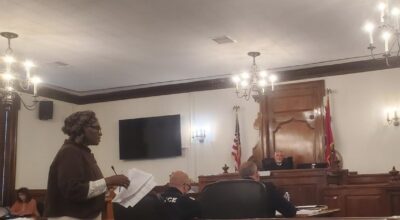
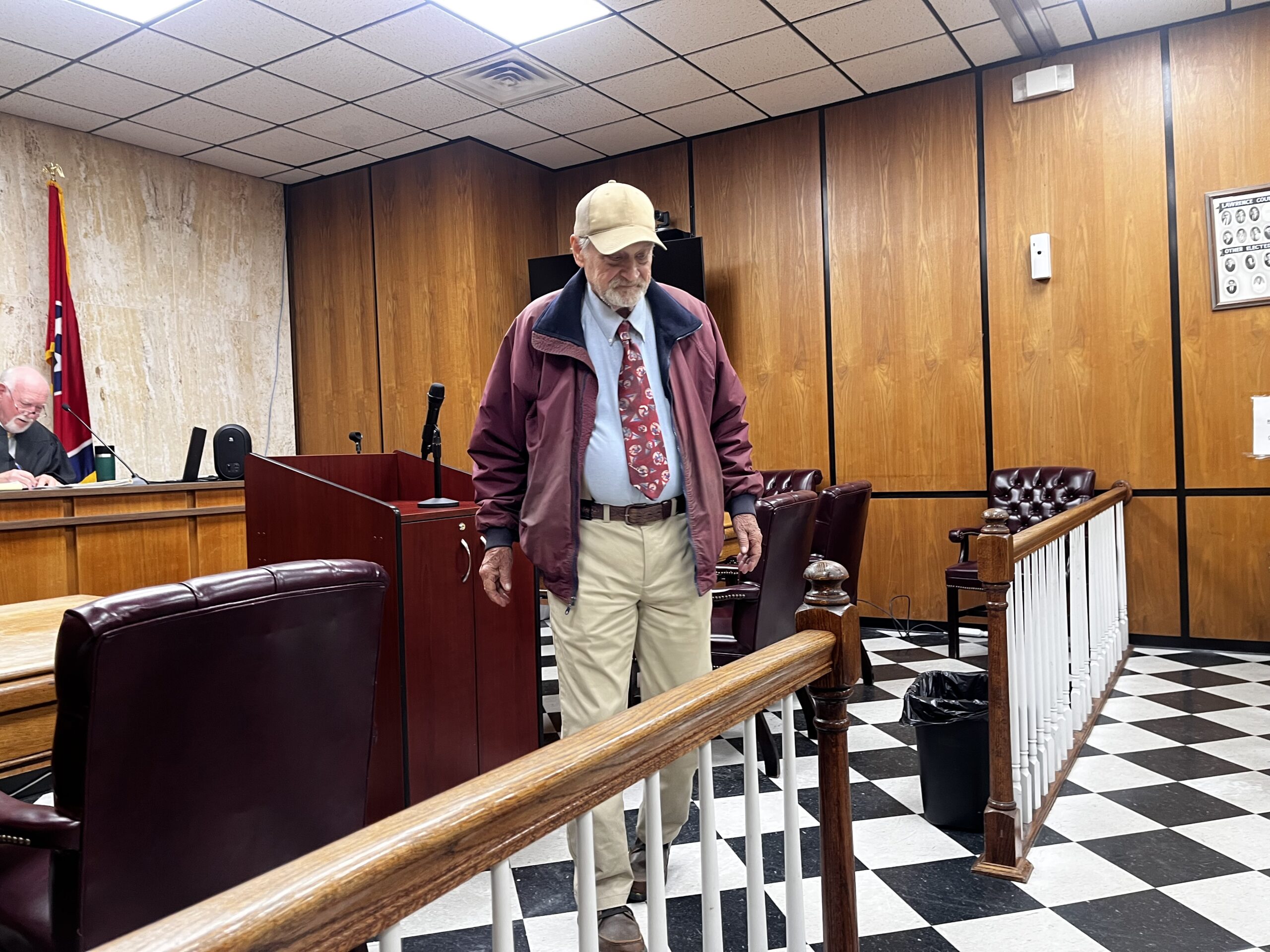
 Treading on a courtroom’s funky Masonic floor, criminal defendant Arthur J. Hirsch turns from Mike Harris, general sessions court judge, in Lawrence County, Tenn. This reporter sued judge Harris in the Tennessee supreme court to be able to take this photograph. (Photo David Tulis)
Thursday, June 4, 2026 — A judge is dismissing a traffic prosecution against a well-known free market user of the road in Lawrence County, Tenn.
Arthur J. Hirsch says Mike Harris, general sessions court judge, has him wait for nearly three hours as he goes through the long docket today in Lawrenceburg.
The traffic prosecution under criminal auspices is dismissed because the citation fails to provide the minimum requirements under the statute at T.C.A. § 55-10-207 namely, that the charging instrument declare a court, the date and the time at which they accused is to make appearance.
“Mr. Hirsch, I was wrong and you are right,” says Judge Harris, according to Mr. Hirsch.
Mr. Hirsch says that the judge declared he will be informing local police about the requirement that criminal citations fully inform the accused of pending hearing particulars.
“The Lord is to be praised,“ Mr. Hirsch says, citing paragraph 13.
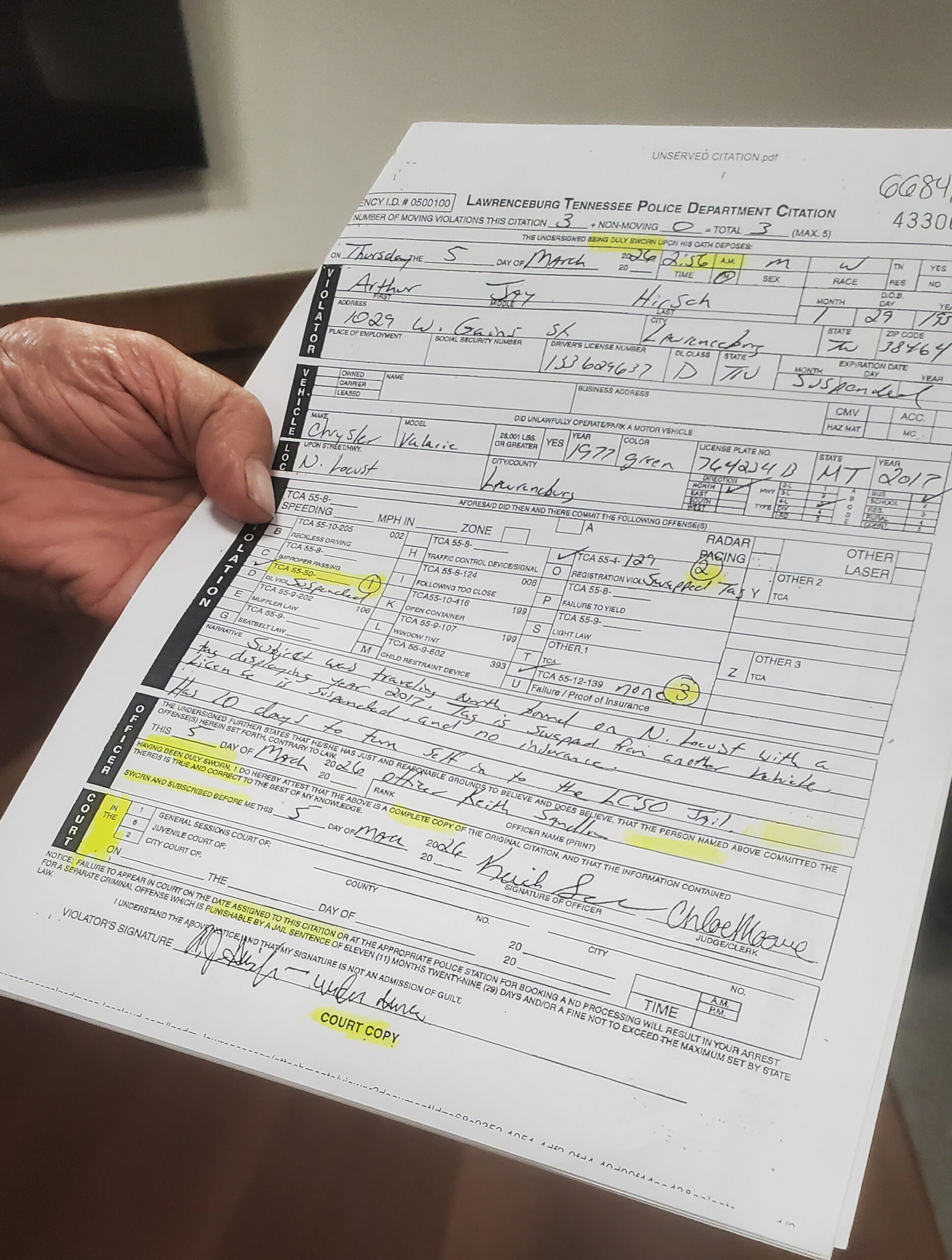
Arthur J. Hirsch, unwilling to rely on a illegible carbon copy of a criminal traffic citation, shows in court a photo he made to show its legal insufficiency of the original, given that it fails to inform him of the time, date, location of his initial appearance in court. (Photo David Tulis)
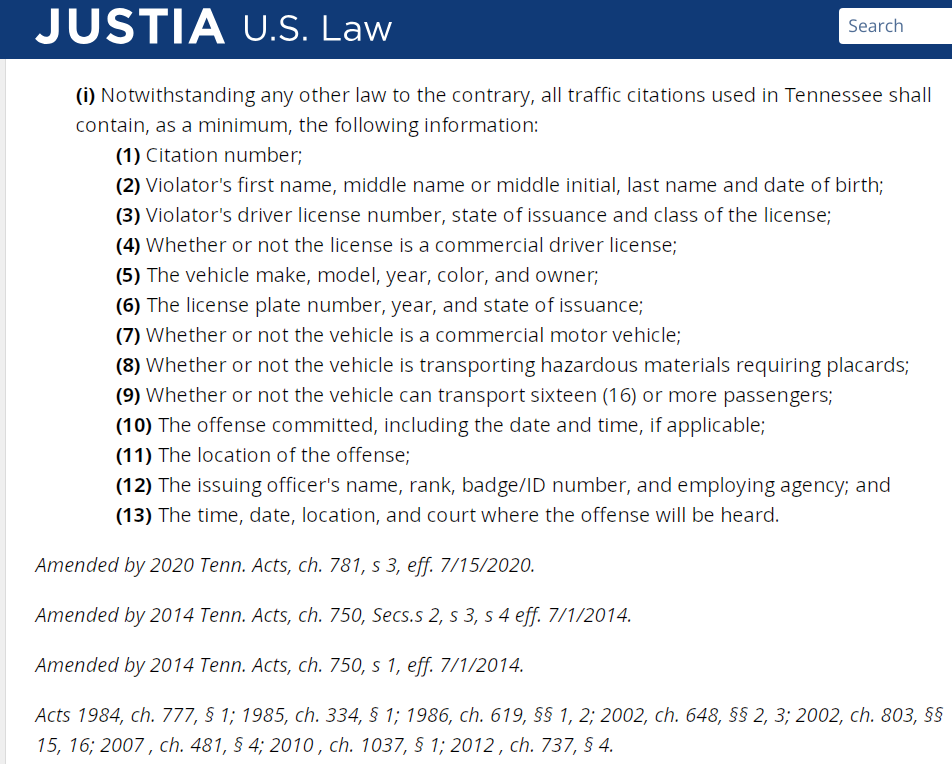
T.C.A. § 55-10-207 – note point 13
Miracle Worker interrupted
Mr. Hirsch stands at the microphone and begins making the case for dismissal because the officer has failed to make appearance to make the state’s case and provide the state’s evidence. The judge interrupts him.
“He said, ‘I’ve been looking at your paperwork. I’ve been talking to other judges,’ and he says, ‘I have to admit that I am wrong and you are right.’”
“To have the time, date and place of court at the bottom of the citation,” Mr. Hirsch says. “Every citation in the state of Tennessee. That’s [T.C.A. §] 55-10-207. You have to. That’s at a minimum. It was missing.”

Judge Mike Harris, Lawrence County general sessions court
He says the judge could’ve dismiss the case on a number of grounds, including Mr. Hirsch’s claim that the affidavit was falsified in felony under clerk administration.
“There were so many issues, but he chose that one, ” Mr. Hirsch says.
Judge Harris’ decision to dismiss the traffic charges could have been based on Mr. Hirsch’s motion to dismiss on grounds that the state had failed to exhaust its administrative remedies by did not pursue its allegations in the department of safety, set up to regulate traffic.
Judge Harris said at a hearing earlier that if this analysis were true, it would bring government enforcement of traffic to a standstill. That powerful contention, evidently, is best left alone if other grounds avail themselves for dismissal.